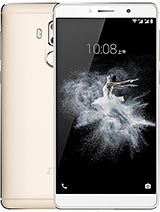
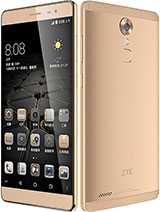
Entry-level · 2017
ZTE Blade Z Max
Our Take
CPU lands in today’s entry-level range
A basic entry-level phone — watch out for a smaller battery and slow 18W charging.
Watch out
Smaller battery (4080mAh), 18W charging (slow)
Skip if
Heavy gaming or multitasking
Full specifications
Display
6.0″ · IPS LCD · 1080 × 1920 · 60 Hz · HDR
Basic
Display
6.0″ · IPS LCD · 1080 × 1920 · 60 Hz · HDR
Basic
Performance
Qualcomm MSM8940 Snapdragon 435 (28 nm) · 8-core 1.4 GHz · Adreno 505
Basic CPU
Performance
Qualcomm MSM8940 Snapdragon 435 (28 nm) · 8-core 1.4 GHz · Adreno 505
Basic CPU
Camera
16 MP main · 8 MP selfie
Camera
16 MP main · 8 MP selfieA standard camera setup — sharp in daylight, expect noise in low light.
Main camera
16 MP
Front camera
8 MP
Video
1080p @ 30 fps
Battery
4080 mAh · 18 W wired
Battery
4080 mAh · 18 W wired
Memory
2 GB RAM · 32 GB · expandable
Tight
Memory
2 GB RAM · 32 GB · expandable
Tight
Connectivity
4G LTE
Connectivity
4G LTE
Build & Design
175 g · 8.4 mm
Build & Design
175 g · 8.4 mmHeight
166.1 mm
Width
84.6 mm
Thickness
8.4 mm
Weight
175 g
Sensors
Fingerprint (rear-mounted) · accelerometer · gyro · proximity
Sensors
Fingerprint (rear-mounted) · accelerometer · gyro · proximitySensors
Fingerprint (rear-mounted), accelerometer, gyro, proximity, compass
Specifications sourced from GSMArena
How it stacks up against the rest.
Quick reads against a few phones in the same price tier. Tap any one for the deep comparison.
vs
Apple iPhone X
Loses on most
1 win
4 losses
50% larger battery capacity
4,080 mAh vs 2,716 mAh battery
Lower-resolution screen
IPS LCD vs OLED panel · 1080 × 1920 vs 1125 × 2436 resolution
Lower performance tier
Entry-level vs Mid-range tier
Less stable camera
No OIS vs OIS · 1080p @ 30 fps vs 4K @ 60 fps video
No NFC
No NFC vs NFC
vs
Samsung Galaxy S8
Loses on most
1 win
4 losses
36% larger battery capacity
4,080 mAh vs 3,000 mAh battery
Lower-resolution screen
IPS LCD vs Super AMOLED panel · 1080 × 1920 vs 1440 × 2960 resolution
Less stable camera
No OIS vs OIS · 1080p @ 30 fps vs 4K @ 30 fps video
No NFC
No NFC vs NFC
Less protected
None vs IP68 protection · 175 g vs 155 g
Where to buy
We don't have any listings for this phone yet. Try searching on Konga or Jiji.
Similar Phones
How each one compares to the ZTE Blade Z Max.