Entry-level · 2017
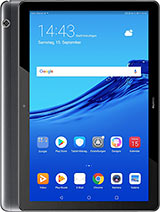
Huawei MediaPad M3 Lite 10
Our Take
CPU lands in today’s entry-level range
A basic entry-level phone with all-day battery — but 16GB storage shows its age.
Best for
Daily driver · WhatsApp · calls
Strength
All-day battery (6660mAh)
Watch out
16GB storage
Skip if
Heavy gaming or multitasking
Full specifications
Display
10.1″ · IPS LCD · 1200 × 1920 · 60 Hz
Basic
Display
10.1″ · IPS LCD · 1200 × 1920 · 60 Hz
Basic
Performance
Qualcomm MSM8940 Snapdragon 435 (28 nm) · 8-core 1.4 GHz · Adreno 505
Basic CPU
Performance
Qualcomm MSM8940 Snapdragon 435 (28 nm) · 8-core 1.4 GHz · Adreno 505
Basic CPU
Camera
8 MP main · 8 MP selfie
Camera
8 MP main · 8 MP selfieA standard camera setup — sharp in daylight, expect noise in low light.
Main camera
8 MP
Front camera
8 MP
Video
1080p @ 30 fps
Battery
6660 mAh
All-day
Battery
6660 mAh
All-day
Memory
4 GB RAM · 16 GB · expandable
Tight
Memory
4 GB RAM · 16 GB · expandable
Tight
Connectivity
4G LTE
Connectivity
4G LTE
Build & Design
310 g · 7.1 mm
Build & Design
310 g · 7.1 mmHeight
241.3 mm
Width
171.5 mm
Thickness
7.1 mm
Weight
310 g
Sensors
Accelerometer · proximity · gyro (Bach-L09 only)
Sensors
Accelerometer · proximity · gyro (Bach-L09 only)Sensors
Accelerometer, proximity, gyro (Bach-L09 only)
Specifications sourced from GSMArena
How it stacks up against the rest.
Quick reads against a few phones in the same price tier. Tap any one for the deep comparison.
vs
Apple iPhone X
Loses on most
1 win
4 losses
145% larger battery capacity
6,660 mAh vs 2,716 mAh battery
Lower-resolution screen
IPS LCD vs OLED panel · 1200 × 1920 vs 1125 × 2436 resolution · Tradeoff: 10.1″ vs 5.8″ screen
Lower performance tier
Entry-level vs Mid-range tier
Less stable camera
No OIS vs OIS · 1080p @ 30 fps vs 4K @ 60 fps video
No NFC
No NFC vs NFC
vs
Samsung Galaxy S8
Loses on most
1 win
4 losses
122% larger battery capacity
6,660 mAh vs 3,000 mAh battery
Lower-resolution screen
IPS LCD vs Super AMOLED panel · 1200 × 1920 vs 1440 × 2960 resolution · Tradeoff: 10.1″ vs 5.8″ screen
Less stable camera
No OIS vs OIS · 1080p @ 30 fps vs 4K @ 30 fps video
No NFC
No NFC vs NFC
Less protected
None vs IP68 protection · 310 g vs 155 g
Where to buy
We don't have any listings for this phone yet. Try searching on Konga or Jiji.
Similar Phones
How each one compares to the Huawei MediaPad M3 Lite 10.